Squat
Sitting down and standing up from a chair, the car or the floor — powered by your hips and legs.

Functional exercising
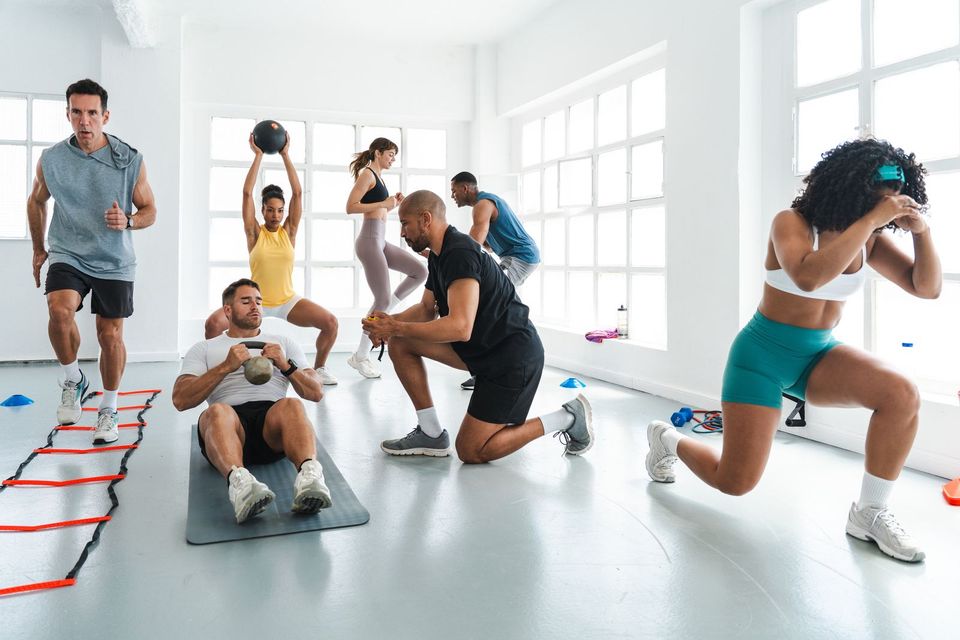
Nutrition fuels your body; movement puts that energy to work. Functional exercise trains the movements you use every day — squatting, lifting, carrying, reaching and balancing — so you stay strong and capable for the life you love.
Why it matters
Functional exercise isn’t about how much you can lift once. It’s about getting up from the floor easily, carrying the groceries in one trip, climbing the stairs without thinking about it, and staying steady on a trail.
Movement has always been part of my work — some clients first met me in an aerobics class I was teaching. When we sit down with your blood chemistry, we look at the whole picture: what you eat, how you rest, and how you move. Your body works as one system, so your plan should too.
Every body is different. Please check with your physician before starting a new exercise routine.
The six movements
Train these, and everyday life gets easier — at any age and any starting point.
Sitting down and standing up from a chair, the car or the floor — powered by your hips and legs.
Bending to pick something up while protecting your back, by moving from the hips instead of the spine.
Pushing a heavy door, lifting a bag into an overhead bin, getting yourself up off the ground.
Opening heavy doors, rowing, lifting a child — the upper-back strength that also helps posture.
Groceries, luggage, laundry baskets — grip, core and posture working together while you walk.
Turning to look behind you, reaching across, stepping off a curb — the steadiness that keeps you on your feet.
How it fits your plan
Your blood chemistry and health questionnaire show where your energy is today, so we start from where you really are.
Your nutrition plan supports the movement you want to do — enough protein, the right timing, and the nutrients your results point to.
A little, consistently, beats a lot, occasionally. We add challenge as your energy and confidence grow.
Follow-up support by phone or email keeps your plan matched to how you feel and how your results change.
A simple starting week
An example of how movement can fit an ordinary week — not a prescription. Your own plan is built with you.
In their words
I also added on HIIT workouts and weights to my cardio workouts.
Angela Fuller
Read their full storiesI’m back to walking several miles without any pain or stiffness.
Charee Copenhaver